
Direct answer
For a ficus, choose a glazed oval in a quiet colour — deep blue, a muted green or cream — about two-thirds of the tree's height in length. Let depth follow the trunk for a heavy tree, and go shallow if you are training aerial roots. Blue is a contrasting colour Bonsai Empire names for pots, and under dark leaves it leaves the pale trunk brightest. Whatever you choose, it needs drainage holes.
Key takeaways
- Broadleaved trees usually take glazed pots in unobtrusive colours; conifers take unglazed. A ficus is a broadleaf.
- None of the sources we cite names a colour for ficus. Our reading: blue for contrast with the dark leaves, green or celadon for a quieter picture, cream to echo the trunk.
- An oval agrees with a sinuous trunk; a rectangle reads sturdier and suits a heavy or root-over-rock ficus.
- Depth about equal to the trunk base for a finished tree; shallow when the aim is aerial roots.
- A ficus lives indoors in most of the US. Mass-market trees often come in pots without drainage holes — the first pot to replace.
01 — GLAZED, QUIETLY
A glaze that
steps back.
Bonsai convention divides pots by the kind of tree. Conifers traditionally belong in unglazed pots; broadleaved trees are usually planted in glazed pots with unobtrusive colours, and flowering trees can take brighter glazes.[1][2] A ficus is an evergreen broadleaf, so the convention points to glaze — but a quiet one.
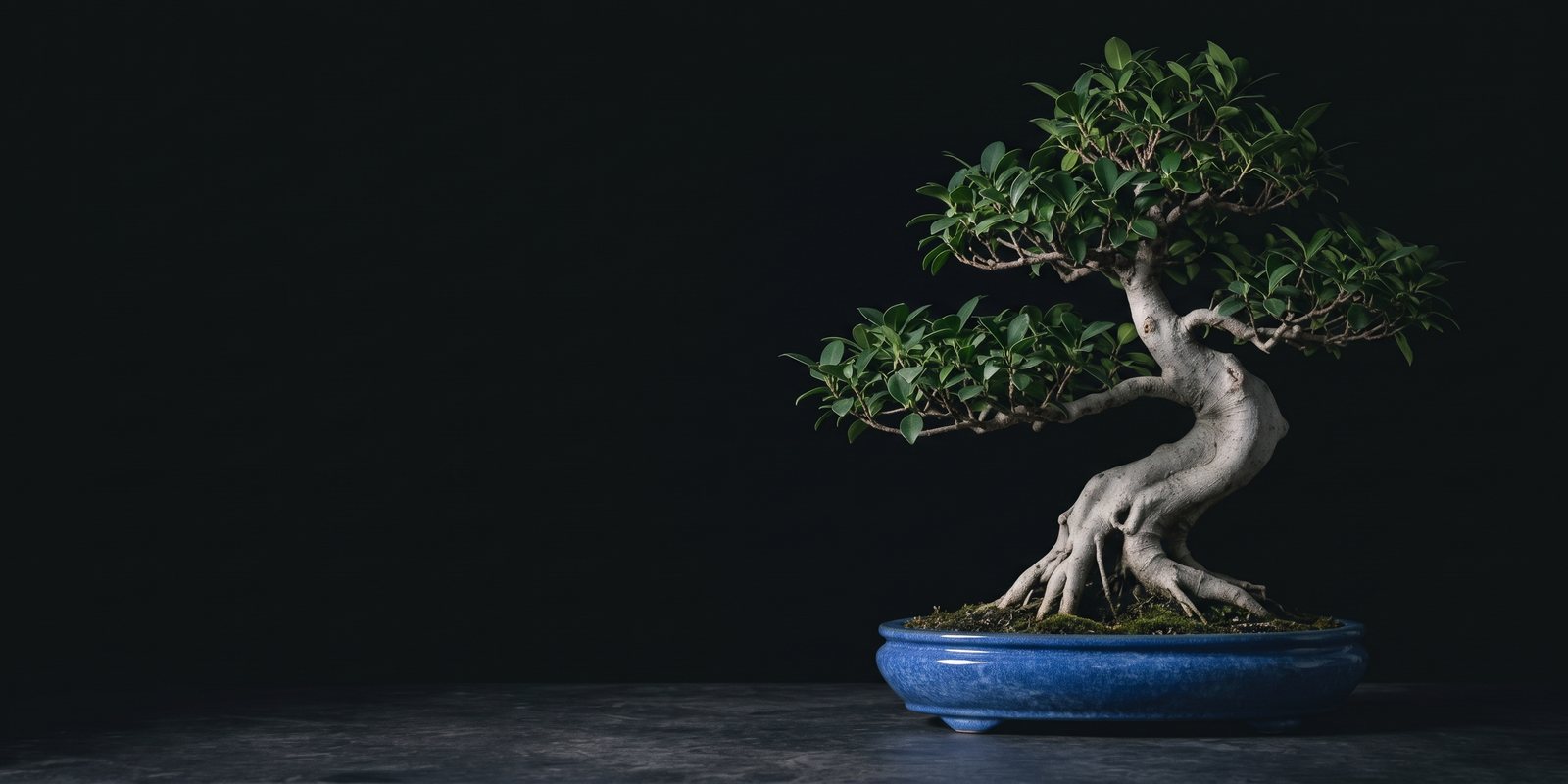
None of the sources we cite names a colour for ficus. Bonsai Empire's rule is that a pot's colour should appear somewhere in the tree — bark, leaves, fruit or flowers — though it also allows contrasting colours, naming blue or cool green;[2] Bonsai Mirai adds that a complementary colour makes a tree pop while an analogous one gives a quieter composition.[3] A typical bonsai ficus has a grey trunk and small dark green leaves.[6] From those two rules and that tree, our reading is three directions: deep blue for contrast, green or celadon for calm, cream to repeat the pale trunk.
The trunk is the ficus's best feature.
Choose the pot that lets it read brightest.
02 — THE PAIRING STUDY
One ficus,
four real pots.
The same tree under four pots you can buy today: a Tokoname oval, an American potter's carved green oval, and a Japanese production oval in blue and in cream.
03 — FORM AND DEPTH
Oval for the curve,
shallow for the roots.
The form follows the trunk. Informal upright trees are most often planted in ovals and formal uprights in rectangles;[1] an oval makes a tree feel buoyant, while a rectangle's corners add visual mass.[3] Many starter bonsai ficus are sold with an S-curved trunk, which is why the oval comes first. Repotting an exposed-root ficus, Bonsai Tonight's Jonas Dupuich judged a glazed rectangle "an OK fit for the tree but slightly sturdy looking for the sinuous trunk and roots" — and used it for that year.[5]
Size follows the familiar rules: pot length about two-thirds of the tree's height, and depth about equal to the thickness of the trunk base.[1] Ficus adds one exception. Shallow containers encourage aerial roots and limit excess root growth,[4] and NC State notes that high humidity, 70 to 100 percent, seems to favour aerial roots.[6] If roots hanging from the branches are your aim, go shallow and plan for humidity; if not, follow the trunk.
| Form | Glaze | Fit | Why |
|---|---|---|---|
| Oval | Deep blue | ◎ | Blue under a grey trunk. Bonsai Empire names blue as a contrasting pot colour; against dark green leaves the pale trunk reads brightest — our reading; An oval stays buoyant under a curving, sinuous trunk |
| Pale celadon | ○ | Quiet green-grey. Celadon is analogous to the leaves: calm, less contrast than blue; Suits a ficus with a strong trunk that needs no help to stand out | |
| Cream | ○ | Repeats the pale trunk. Cream echoes the grey-white bark; light and soft; Needs a darker shelf or wall to keep its outline | |
| Deep green | ○ | Green under green. Deep green is the quiet, analogous composition; Shallow is the depth Bonsai Mirai ties to aerial roots | |
| Unglazed | ○ | Earth under a tropical. Broadleaf trees usually take glazed pots in unobtrusive colours; unglazed is the plainer hand; Brown clay makes the trunk read paler still | |
| Soft charcoal | △ | Dark under dark leaves. Charcoal and dark green sink together; only the trunk carries the picture; For a ficus with a very pale, heavy trunk | |
| Rectangle | Deep blue | ○ | Sturdier, still blue. A rectangle reads heavier; on a sinuous trunk it can look slightly sturdy; Blue works as on the oval |
| Pale celadon | ○ | Composed and cool. Choose softened corners for a curving tree | |
| Cream | ○ | Bright and formal. Suits a straighter, formal ficus better than an S-curve | |
| Unglazed | ○ | For a heavy, root-over-rock ficus. Mass answers mass: a big trunk or exposed roots carry a rectangle | |
| Soft charcoal | △ | Severe for a tropical. Charcoal and corners together read stern under soft leaves | |
| Round drum | Deep blue | △ | A drum runs deep. Aerial-root and banyan styles want shallow pots; a drum holds water and hides the roots |
| Pale celadon | △ | Soft on soft. Celadon and a round drum together read sweet above shohin size | |
| Cream | △ | Shohin only. A small cream round can host a small ficus; larger trees return to the oval | |
| Unglazed | △ | Literati grammar. A shallow unglazed round suits a thin, tall trunk — rare in ficus | |
| Soft charcoal | × | Too much shadow. A charcoal drum under dark leaves loses the tree's outline |
◎ recommend / ○ works / △ conditional / × advise against. A particular tree can overrule any row.
Fits a ficus
- Glazed oval, length about ⅔ of the tree's height
- Deep blue, muted green, celadon or cream
- Depth near the trunk base — or shallow for aerial roots
- Generous drainage holes
Rarely fits
- A pot without drainage holes, which mass-produced trees sometimes come in[9]
- A deep drum under a tree you want to grow aerial roots
- Dark charcoal under dark leaves — the outline disappears
- Bright red or orange: nothing in a ficus answers it
04 — AN INDOOR TREE
Warm all year,
bright all day.
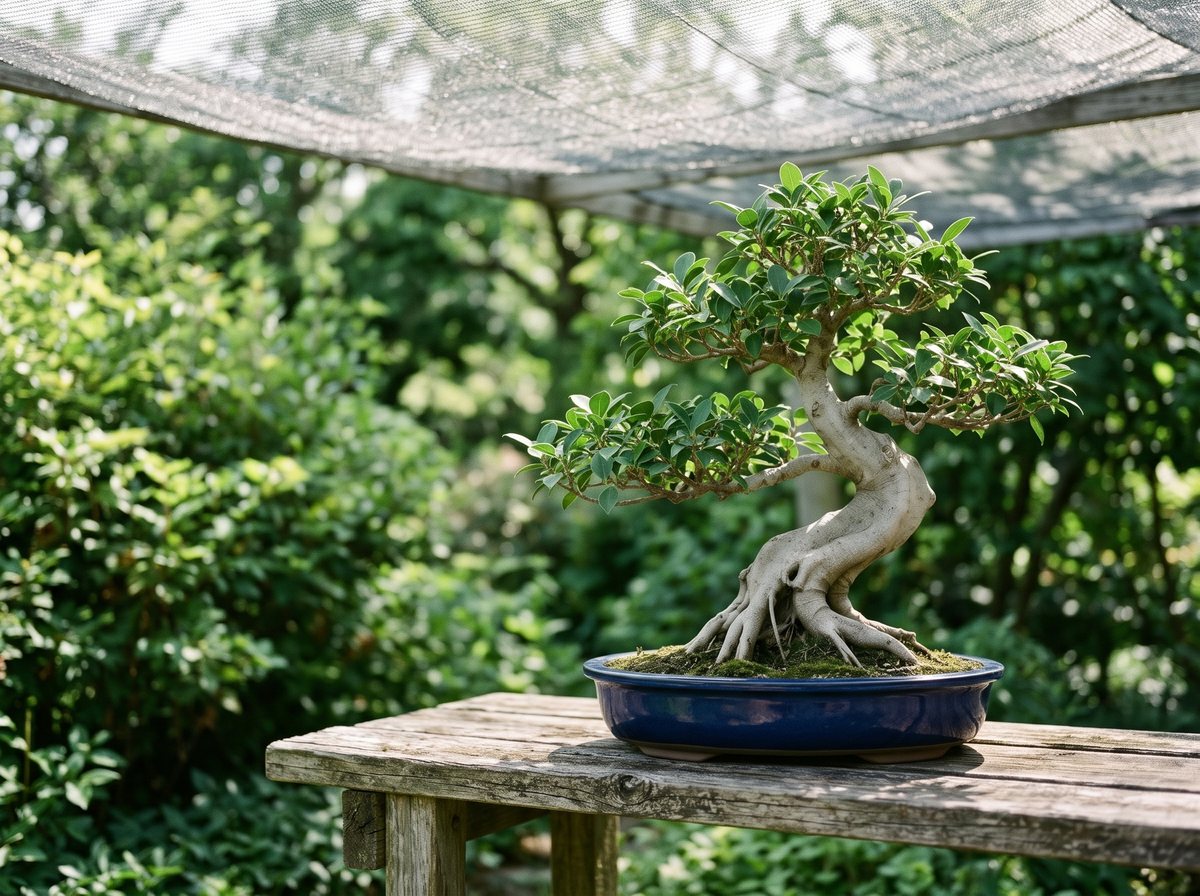
A ficus is hardy only in USDA zones 9a–11b and is generally sold as a houseplant because it wants temperatures above 68°F all year.[6] In most of the country it lives indoors and summers outside: bring it in before autumn nights fall below 55°F, and take it out only when spring nights hold above that.[7][8] Indoors, a grow light 6–12 inches above the tree often supplies what a window cannot.[8]
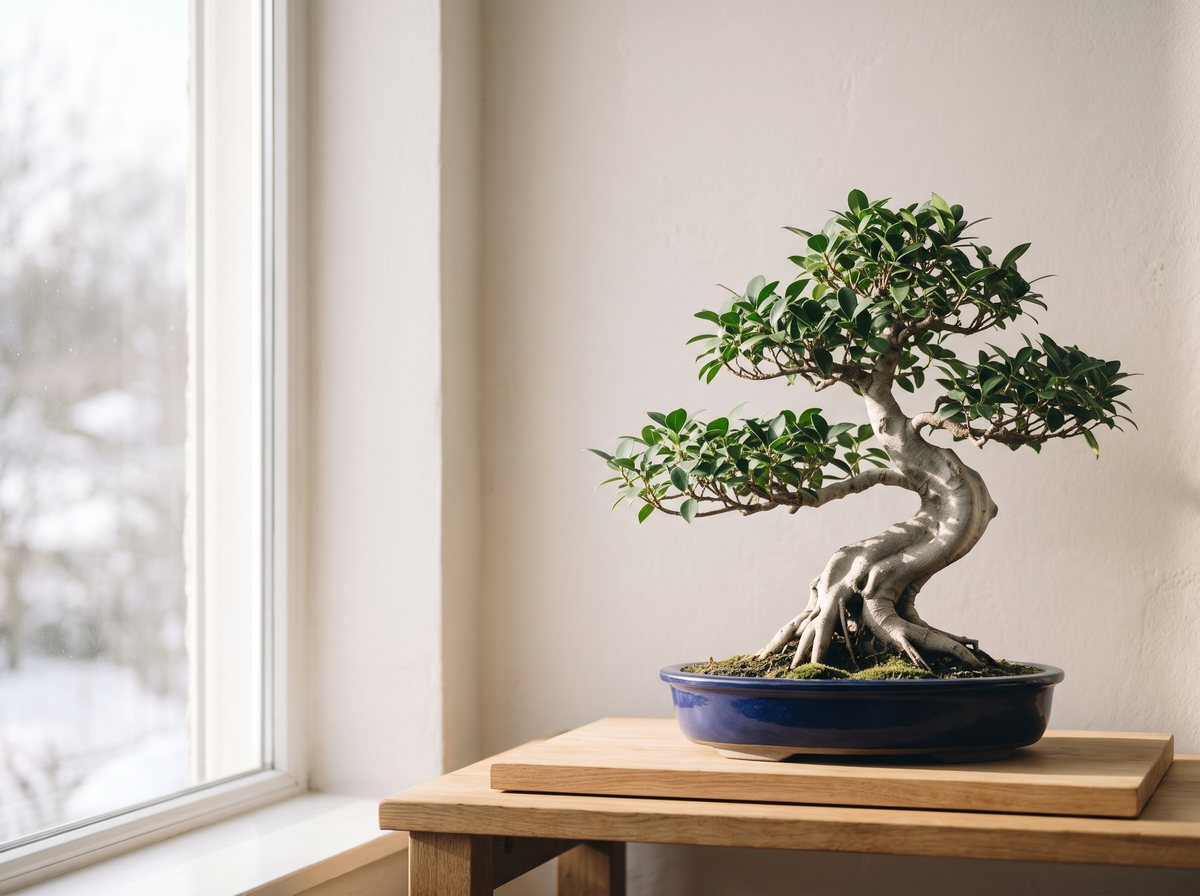
That changes the pot question in one way: frost resistance does not matter, and a humidity tray underneath — a shallow tray of water the pot sits above — is the indoor addition Matthaei recommends.[8] The full year is in our buying guide; the care note follows.
05 — THREE PATHS, REAL POTS
Three honest
paths.
Not a ranking — three relationships with the same standard. Each pot was live, priced and in stock on the day we checked.
Prices and stock checked November 12, 2026. Plain links — no affiliate.
I — Japanese Masterpiece
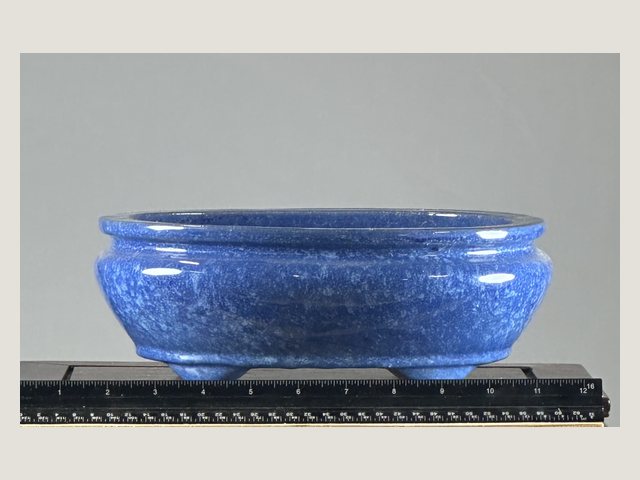
Shuho of Tokoname — a blue oval with small feet.
Glazed oval by Shuho (STJP1046) — Bonsai Learning Center
An oval by Shuho, imported from Tokoname, the town that has made bonsai pots for generations. The listing names the potter and the region but not the colour; the photograph shows a mottled blue, deep at the foot and paler at the rim. In our composite study, the dark leaves sit against blue and the pale trunk becomes the brightest thing. At 25 cm long and 8.9 cm deep it suits a finished tree of about 38 cm with a substantial trunk.
- Size
- 25.4 × 21.6 cm, 8.9 cm deep
- Origin
- "imported from the Tokoname region in Japan"
- Sold as
- A single listing, 1 in stock
- Stock
- In stock — checked Nov 12, 2026
$200.00shipping included (seller)
Product page ↗II — Local Artisan Choice
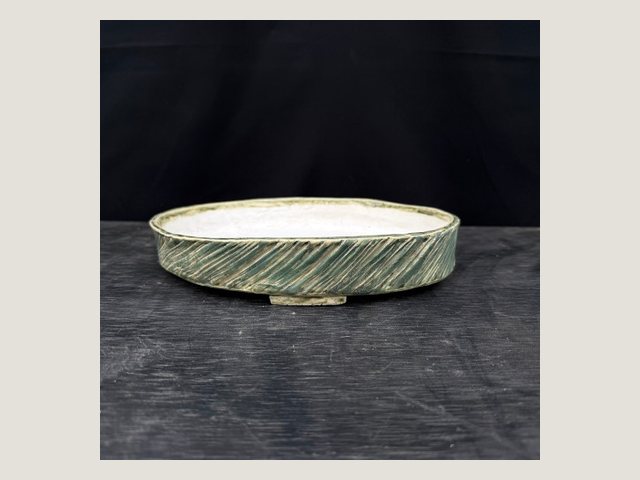
John Fazzino — a carved green oval from Providence.
10" oval by John Fazzino, deep green glaze with diagonal carving (No. 33) — Bonsai Outlet
Fazzino works in Providence, Rhode Island, and this oval carries hand-carved diagonal lines under a deep green glaze. The seller lists it for broadleaf evergreens. At 4.1 cm it is shallow — the depth that encourages aerial roots — and green beside green leaves makes the quieter, analogous picture. It is the one-off you receive, as photographed.
- Size
- 24.8 × 20.3 cm, 4.1 cm deep
- Origin
- USA — "John lives and works in Mt. Pleasant, Providence"
- Sold as
- One-off: "This is the exact pot you'll receive."
- Stock
- In stock — checked Nov 12, 2026
$110.00shipping separate
Product page ↗III — First Practice
A Japanese dark-blue oval, at a first-pot price.
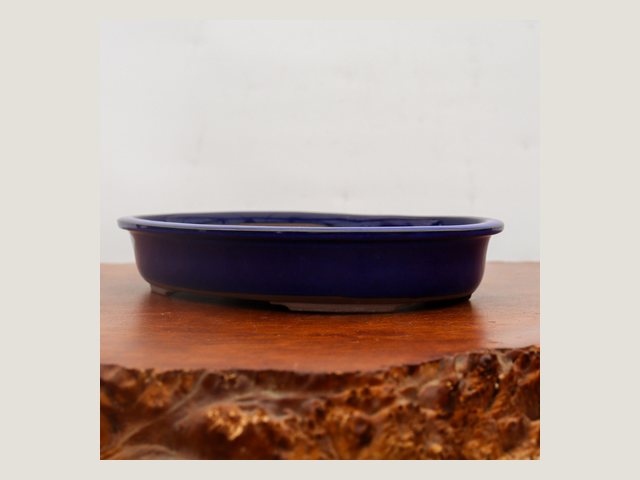
Dark blue glazed Japanese oval (No. 1552) — Bonsai Outlet
The first pot to buy for a ficus that arrived in a pot without drainage: a plain Japanese production oval in dark blue, with the same grammar as the Tokoname piece above. It comes in 9, 11 and 12 inches; choose the size closest to two-thirds of your tree's height. The same pot in cream is the softer alternative.
Softer, same price — the cream version of No. 1552.
- Size
- 11": 28.6 × 21.0 cm, 5.1 cm deep (also 9" and 12")
- Origin
- "Origin: Japan"
- Sold as
- Production
- Stock
- In stock — checked Nov 12, 2026
$29.9511"; 9" $24.95, 12" $34.95
Product page ↗If your ficus is a heavy, root-over-rock tree rather than an S-curve, the rectangle rows in section 03 apply instead; if it is a small shohin, the cream round is the exception that works.
06 — THE ENSEMBLE
A ficus on a shelf
is half a display.
Indoors, the display is the room. A board under the pot, the brightest window, one lamp in the evening and a can by the door. Japanese craft is beautiful — and because the beauty comes from the conventions, it can be built from what is near at hand.
1 — EYELINE
A board under
the pot.
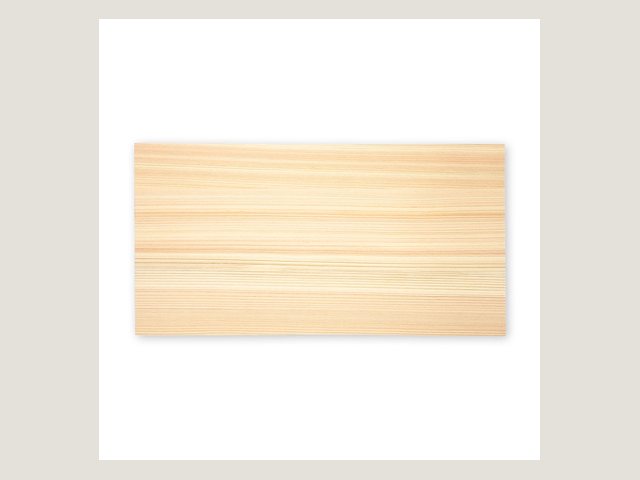
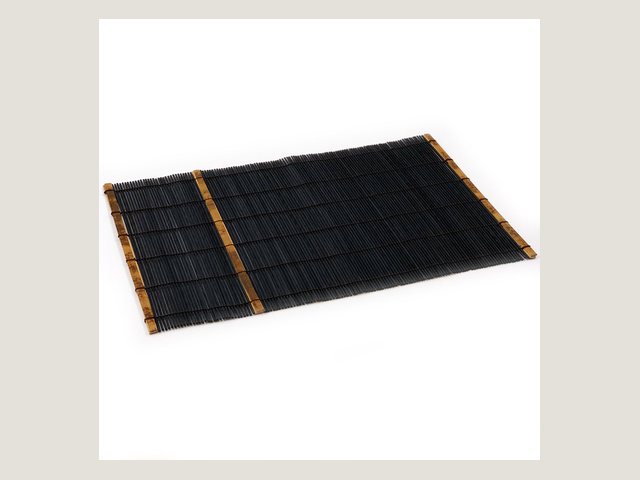
On a shelf or a table, a board or mat one size larger than the pot turns a houseplant into a tree on display.
2 — LIGHT
The window first,
then one lamp.
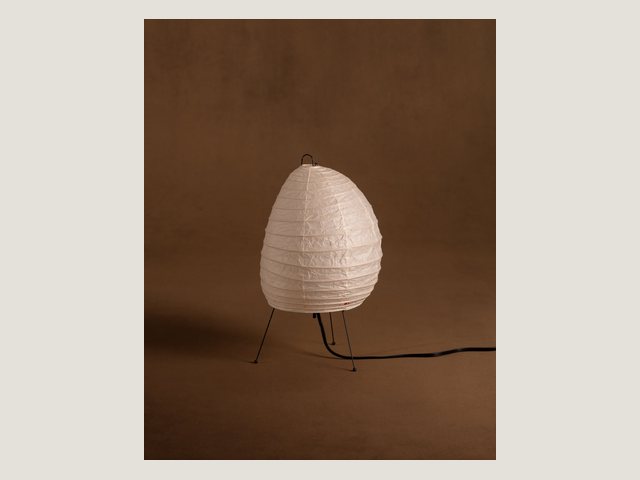
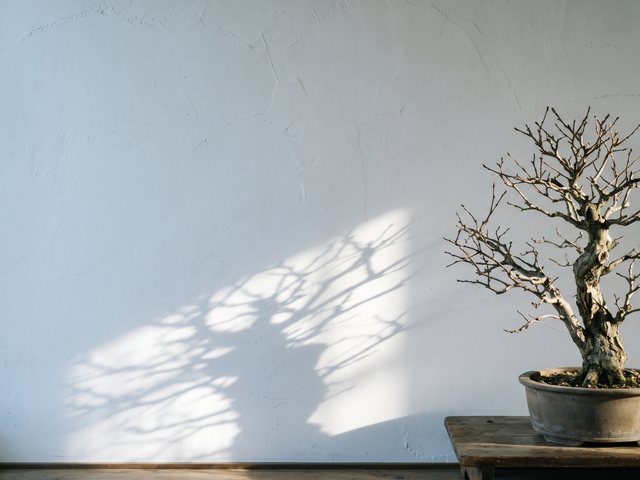
Daylight is the ficus's food. The lamp is for the evening display, and it is one lamp.
3 — CARE
The watering can
by the door.
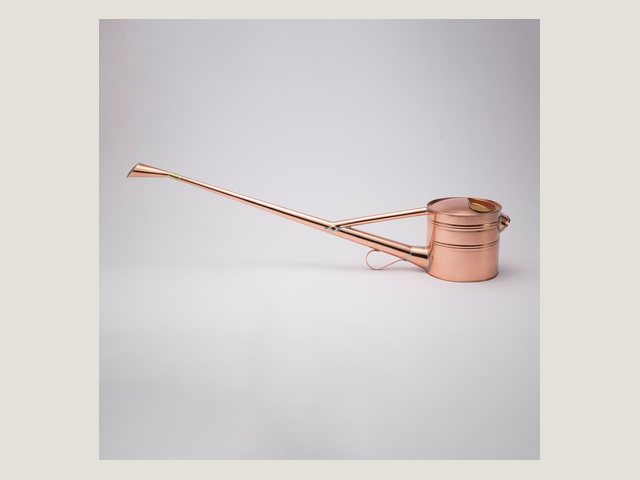
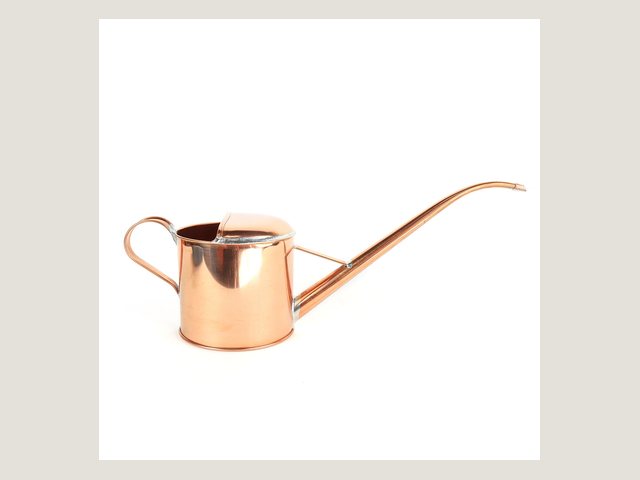
Water when the top of the soil dries, until it runs from the holes. A can you like to hold is a can you use.
07 — BEFORE YOU HESITATE
The fears, answered
from the facts.
"It dropped leaves after I repotted it."
Weeping figs often drop leaves after sudden changes in light, temperature or watering, and a tropical bonsai moved to a new place commonly yellows or drops leaves; Matthaei calls this normal.[7][8] Repot when the weather is warm, not in midwinter, and water less while it is leafless.
"A shallow pot will dry out too fast."
It dries faster, which is why shallow pots belong with a plan: daily checks, a humidity tray, and a tree that is established. If you cannot check daily, take the deeper of two sizes; the trunk rule still holds.
"I'll buy the wrong size."
Measure the tree's height from the soil to the top and the trunk at its base, then read the listing's outside dimensions. Length about ⅔ of the height, depth about the trunk — the numbers decide, not the photograph.
08 — BEFORE YOU PAY
The five-point
check.
- Drainage holes, more than one, unblocked
- Length about ⅔ of tree height; depth near the trunk base — or shallow for aerial roots
- A glaze colour you can find in the tree, or its quiet opposite
- Outside or inside dimensions — which does the listing give?
- Origin stated in words on the page, not inferred from the photo
09 — QUESTIONS
Asked, answered.
Glazed or unglazed for a ficus?
Glazed is the convention for broadleaved trees.[1] An unglazed pot is not wrong — it reads plainer and makes the trunk look paler still — but it is the exception for this tree.
What colour pot suits a ficus?
None of the sources we cite names one. Bonsai Empire allows contrasting blue or cool green; applying its colour rules and Mirai's to a grey trunk and dark green leaves, we recommend deep blue for contrast, green or celadon for calm, and cream to echo the bark.[2][3]
Sources
- Bonsai Empire — Bonsai pot (glaze by tree type; form by style; length and depth).
- Bonsai Empire — Choosing a bonsai pot (colour should appear in the tree; drainage).
- Bonsai Mirai — Choosing your ceramics (complementary vs analogous colour; oval vs rectangle).
- Bonsai Mirai — Ficus bonsai (shallow containers for aerial roots; repotting temperature).
- Bonsai Tonight — Pruning and repotting an exposed root ficus (2020).
- NC State Extension Plant Toolbox — Ficus microcarpa (zones, temperature, humidity, description).
- Missouri Botanical Garden — Why is my weeping fig dropping leaves?
- Matthaei Botanical Gardens, University of Michigan — Horticulture at home: growing bonsai inside (2026).
- Bonsai Empire — Ficus bonsai care guide (buying a ficus: mass-produced trees, pots without drainage holes).