
Direct answer
Keep a Japanese maple bonsai outdoors year-round in roughly USDA zones 5–8, in morning sun and afternoon shade; water whenever the soil surface begins to dry (daily in summer heat), protect the pot from hard freezes in winter rather than bringing the tree inside, do structural pruning after autumn leaf fall or in late summer once leaves harden — not in late winter, when rising sap makes maples bleed — and repot in early spring just as buds swell, roughly every two to three years. It cannot live indoors — that single fact decides most of the rest.
Key takeaways
- Acer palmatum is a temperate outdoor species (about zones 5–8) that requires a cold winter dormancy; indoor keeping fails slowly but reliably.
- The two killers are missed summer water and winter root-freeze in a shallow pot. Everything else is refinement.
- Leaf scorch — brown, crisped edges in summer — is the species' signature complaint; afternoon shade and steady water are the treatment, and it is rarely fatal.
- Winter protection means protecting the roots, not warming the tree: an unheated, sheltered cold spot beats any living room.
- Big work has narrow windows: structural pruning after autumn leaf fall (or late summer), repotting at early-spring bud swell — and no big cuts from late winter into spring, when maple sap rises. Outside the windows, restraint is care.
01 — OUTDOOR, HONESTLY
The one fact that
decides the rest.
A Japanese maple is an outdoor tree, and no care technique negotiates with that. University extension guidance places Acer palmatum in roughly USDA hardiness zones 5–8,[1][2] and the species' annual rhythm — leaf-out, summer growth, autumn color, leafless dormancy — is driven by the temperature and light cycles of living outside. The winter rest is not a hardship the tree endures; it is a requirement, and keeping the species without it is how indoor maples fail.
It helps to see the year as the tree sees it. Spring is the sprint: buds break, energy pours into new leaves, and most of the year's growth happens in weeks. Summer is maintenance — the tree banks sugar and asks mainly to be watered and not cooked. Autumn is withdrawal: nutrients pull back from the leaves (the color is the chemistry of that retreat), and the tree sets next spring's buds before going dormant. Winter is not sleep so much as a sealed state the species cannot skip. Every task in this note is timed against that rhythm, which is why "when" matters more than "how" in maple care.
Indoors, a maple fails slowly: it may hold leaves for months on stored energy while light starvation and missing dormancy run it down. If your growing space is a windowsill, the honest move is a tropical species — see the indoor-tree discussion in our US buying guide — not a maple and a hope.
Placement outdoors is specific, though: the classic advice for this species is sun in the morning, shade in the hot afternoon. Extension sources note that in hotter zones leaves scorch readily in full summer sun without shade or steady water.[1] In a shallow bonsai pot, that sensitivity is amplified — the root zone heats and dries faster than any landscape bed.
Care for the climate first.
The tree is mostly
the climate, concentrated.
02 — THE CARE CALENDAR
One year, on
one table.
This calendar compresses the year into the decisions that matter, split by the two broad climate bands most US maple keepers live in. It assumes a healthy, established tree in a bonsai pot.
| Season | Zones 5–6 (cold winters) | Zones 7–8 (hot summers) | Hands off |
|---|---|---|---|
| Early spring | Repot at bud swell; move out of winter shelter after hard freezes pass; watch late frosts on new leaves | Repot at bud swell (earlier than the north); full morning sun is welcome | No fertilizer until leaves harden |
| Late spring | Begin gentle feeding; water daily as growth surges; pinch overlong new shoots | Shift toward afternoon-shade placement before first heat; same feeding and pinching | No major branch removal in the growth flush |
| Summer | Water daily, mornings; shade cloth or east-side placement in heat waves | Water daily, sometimes twice in heat; afternoon shade is non-negotiable; expect some edge scorch in bad weeks | No repotting; no heavy pruning; no moving the goalposts on water |
| Autumn | Reduce feeding; enjoy color; after leaf drop, clean dead twigs — and this is the structural-pruning window | Same, a few weeks later; color often runs milder in warm falls | No late-season pruning that pushes tender growth before frost |
| Winter | Shelter the pot: unheated garage, cold frame, or ground-heeled with mulched roots; water occasionally so roots never dry | Outdoor wintering usually fine; shelter only for hard-freeze snaps; keep the dormant tree in light shade | Never into a heated room; no structural cuts once late winter approaches and sap rises |
Compiled by the JAPAN BONSAI EDIT editorial team from the extension and grower sources cited below, adapted to shallow-container culture. A calendar is a default, not a law: your microclimate — balcony wind, wall heat, valley frost — moves these dates by weeks.
03 — WATER AND SCORCH
The daily question
and the brown edge.
Watering a maple bonsai is one decision repeated: when the surface of the soil starts to dry, water thoroughly until it runs from the drainage holes. In spring that may be daily; in high summer, morning and evening; in dormancy, perhaps weekly — the tree's thirst follows its leaves. What the species will not forgive is a fully dried root mass in July. One hard miss can cost the year's foliage; two can cost the tree.
Leaf scorch is the complaint every maple keeper eventually meets: brown, papery leaf edges appearing in summer. Extension guidance is blunt that scorch follows heat, wind and water stress[1], and that in hot, dry stretches the species needs steady supplemental water to hold clean foliage.[3] In a pot, your levers are placement (afternoon shade), water discipline, and wind shelter. Scorched leaves do not repair — but they also rarely mean a dying tree. The test is next spring's leaf-out, not this August's edges.
Two refinements earn their place quickly. Water in the morning where you can: the tree enters the hot hours stocked, and foliage dries before night. And do not let rain make the decision — a summer shower often wets the leaves and the top centimeter while leaving the root mass dry, especially under a dense canopy. The finger test outranks the weather report. Water quality rarely matters at this scale; frequency discipline is the whole game.
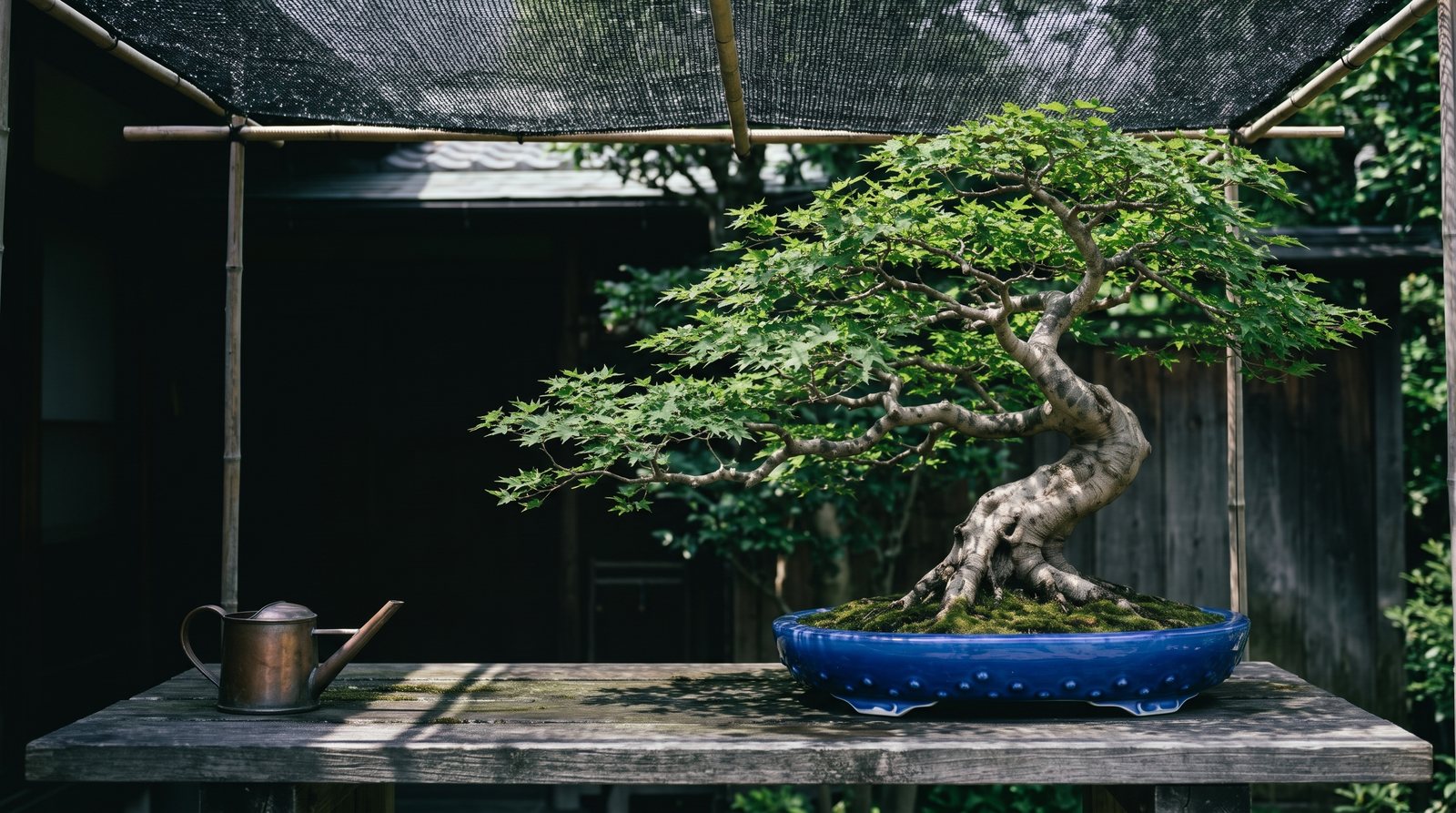
Check daily. Water when the surface dries. Soak until it drains. Repeat for a decade.
04 — WINTER BY ZONE
Protect the roots,
not the tree.
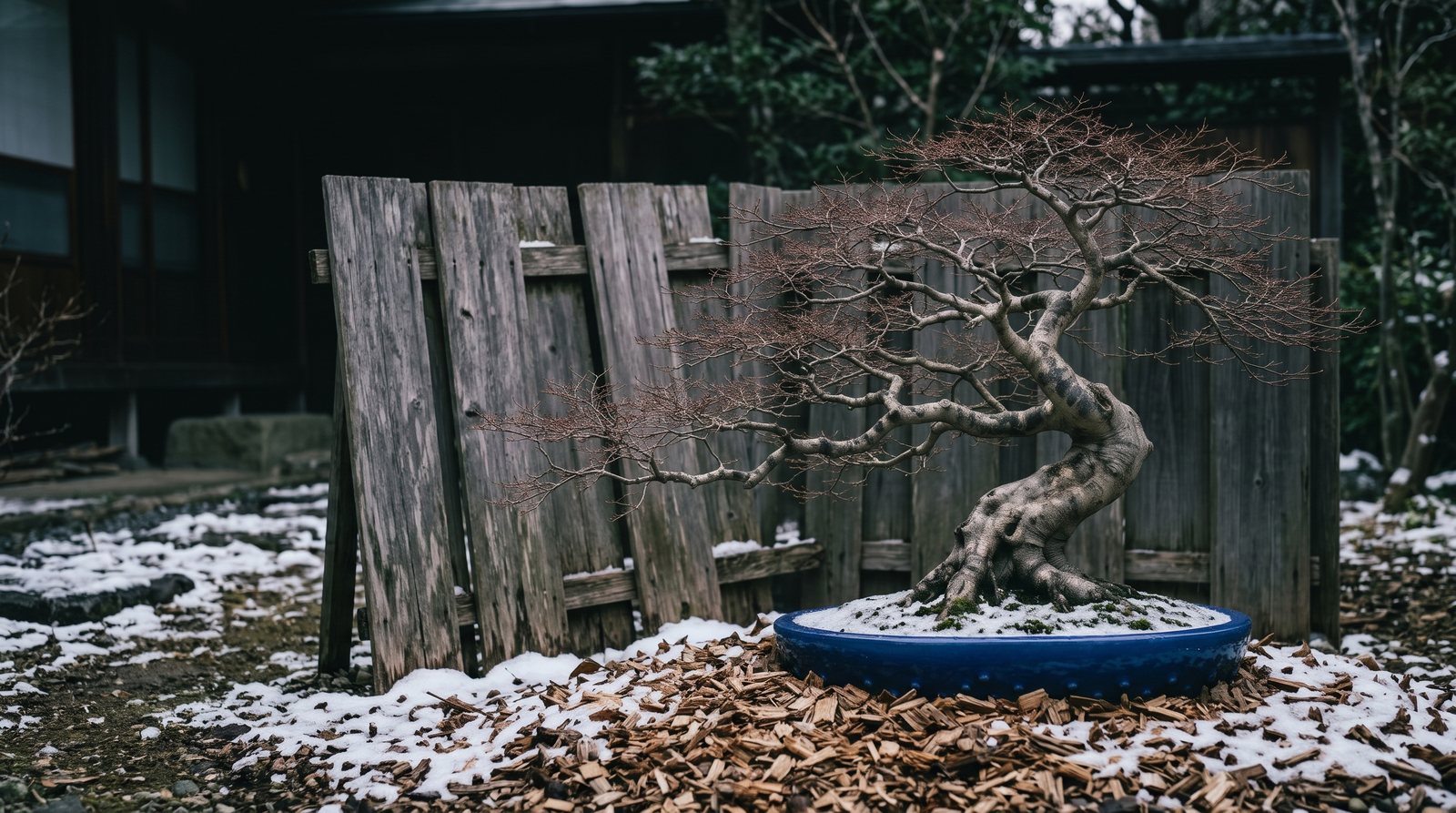
Winter is where new keepers invert the logic. The tree above the soil line is hardy through the species' range; the vulnerable part is the root mass, because a bonsai pot freezes solid in conditions a landscape root zone never sees. Winter care therefore means buffering the pot, never warming the tree.
Microclimate beats zone number at the margins. A balcony five floors up is windier and colder than its zone suggests; a pot against a south-facing wall can be a zone warmer — and can also be tricked into breaking dormancy in a false spring, which is its own hazard. Watch where snow lingers and where it melts first in your space: the lingering spots are honest cold, the fast-melting ones are heat leaks. Place the wintering tree in honest cold with no wind, and it will out-sleep most problems.
In zones 5–6, give the dormant tree a cold but sheltered berth — an unheated garage or shed with some light, a cold frame, or the pot heeled into the ground and mulched. In zones 7–8, most winters pass safely on the bench, with shelter only for abnormal hard freezes. Everywhere, two rules hold: the tree still needs occasional water in dormancy, because container roots are the vulnerable, desiccation-prone part[4]; and a heated room is not protection — it ends the dormancy the species requires, and the tree declines from there.
The number that matters is the roots'. In a University of Massachusetts table drawn from root-hardiness research, the temperature that killed more than half the root system of the red Japanese maple 'Atropurpureum' was 14°F,[7] while Maryland Extension notes the parts above ground survive freezes down to zero.[4] Container roots are not buffered by the ground. Illinois Extension describes the same three answers this note gives: a cool garage or basement in the upper 30s to low 40s °F, a container wrapped in burlap or straw, or the whole pot buried so the ground insulates it.[8]
05 — PRUNING & REPOTTING
Narrow windows,
light hands.
Maples bleed sap from cuts made while sap is rising — late winter through spring — which is why their big-cut calendar differs from most trees'. The working windows:
In season
- Structural pruning: in dormancy after leaf fall[4], or late summer once leaves harden[5] — never from late winter into spring
- Dead twigs: any time, as extension guidance allows[4]
- Pinching soft new shoots: spring, to keep internodes short
- Repotting: early spring at bud swell, every 2–3 years for young trees
- Root pruning: only at repotting, removing up to about a third
Out of season
- Heavy pruning from late winter through the spring flush — the sap-rise months when maple cuts bleed[4]
- Repotting a tree in leaf, or a newly shipped tree — let it recover first
- Late-autumn cuts that push tender growth into frost
- Fertilizing a freshly repotted or stressed tree
- Wiring that bites — maple bark scars and keeps the receipt
Container trees are also the exception to the species' light appetite: in the landscape most Japanese maples need little or no fertilizer, but a bonsai pot leaches nutrients and benefits from gentle, regular feeding through the growing season.[4] Gentle is the operative word — this is not a species you push.
06 — THREE PATHS, REAL TOOLS
The tools a maple
actually asks for.
A maple asks for few tools: one clean cut, a soil that drains, wire that does not bite. These three are not a ranking — three relationships with the same work. Each was live, priced and in stock on the day we checked.
Prices and stock checked November 12, 2026. As an Amazon Associate I earn from qualifying purchases. Links marked Amazon are affiliate links; other links are plain. Amazon prices are shown on Amazon.
I — Japanese Masterpiece
A spherical concave cutter, made in Japan.
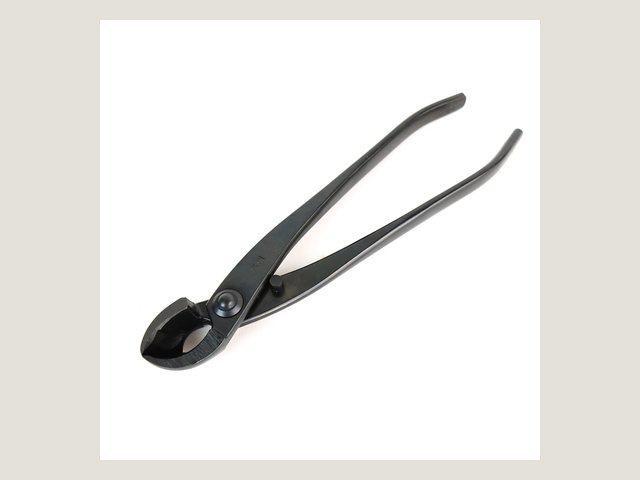
Kaneshin spherical concave branch cutter, 8" carbon steel — Eastern Leaf
The one tool that changes how a maple heals. A rounded jaw leaves a shallow hollow where a branch is removed, which heals flatter than a straight cut and leaves no knob. Kaneshin's is matte black carbon steel, a single dark line from jaw to handle. Keep it oiled: carbon steel takes a fine edge and rusts if it is put away wet.
Straight-edged, the same 8" length — Kaneshin No. 3a at Bonsai Outlet, $74.95.
- Size
- 8", carbon steel
- Origin
- "Origin: Made in Japan"
- Use
- Branch removal in the autumn and late-summer windows above
- Stock
- In stock — checked Nov 12, 2026
$99.00free shipping over $99 (seller)
Product page ↗ Smaller sibling (No. 1a, 170 mm) on Amazon ↗II — Local Artisan Choice
A soil mixed and shipped in the US.
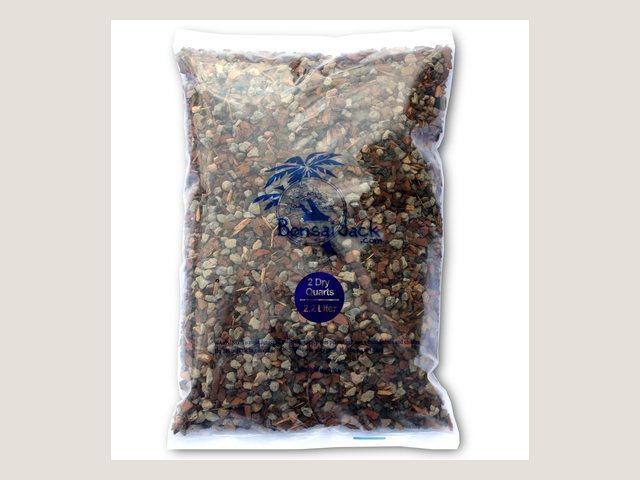
BonsaiJack Universal Organic Mix #221 — Bonsai Jack
A maple in a shallow pot lives on drainage and air. This premix states its recipe — 40% lava rock, 40% calcined clay, 20% pine bark fines, all quarter-inch — and a pH of 6.4, and it ships from the company's Florida packing facility, according to a retailer that stocks Bonsai Jack soils. No sifting, no sourcing: a reader can repot in spring with a bag that arrived in days.
- Size
- 2 dry quarts (also 1–24 gallons)
- Mix
- 40% lava rock, 40% calcined clay, 20% pine bark fines; pH 6.4
- Origin
- Ships from Florida — stated by a stocking retailer[9]
- Stock
- In stock — checked Nov 12, 2026
$17.31free US economy shipping (seller)
Product page ↗ Same mix (2 qt) on Amazon ↗III — First Practice
Honest shears for the first two years.
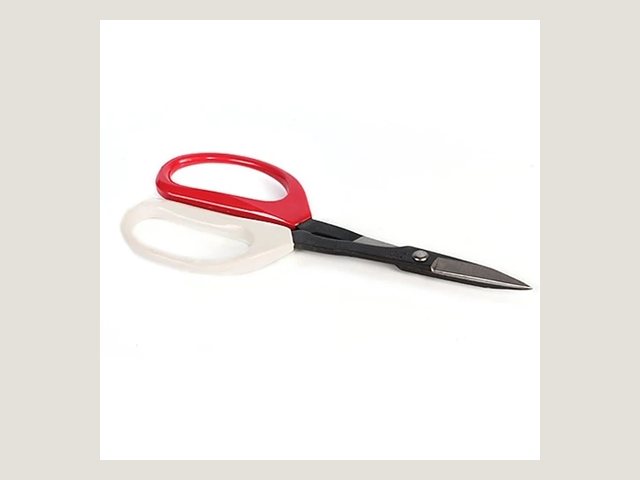
All-purpose bonsai shears, 8" carbon steel — Eastern Leaf
A first maple needs pinching and twig trimming far more than heavy cuts, and that work is done with shears. These are carbon steel, made in Taiwan, with red-and-white loop handles that read as utility rather than craft — honest about what they are. Buy the concave cutter the year a branch needs to come off.
Handmade in Japan at a step up — Kaneshin No. 40E shears, $64.95 · its stainless sibling (No. 827) on Amazon ↗.
- Size
- 8", carbon steel
- Origin
- "Made in Taiwan."
- Level
- Beginner (seller)
- Stock
- In stock — checked Nov 12, 2026
$17.95shipping separate
Product page ↗Before you buy a tool
- Origin stated on the page, in words — "Made in Japan" is a claim the listing should make, not the photo
- Carbon or stainless: carbon takes a finer edge and rusts; stainless forgives a damp shed
- Size to the tree: an 8" (about 205 mm) cutter is the standard all-round size for a maple of this scale
- For soil: grain size and components listed as numbers
- For wire: aluminum (anodized or coated) for maples; copper is the conifer wire and can stain deciduous bark[10]
07 — THE YEAR'S KIT
One kit,
four seasons.
Care is a set, not a tool. Japanese craft first — and because the conventions do the work, the same care can be built from what is near at hand, or from nothing at all.
1 — WIRE
Aluminum,
gently.
Maple bark marks easily; wire goes on loosely in the growing season and comes off before it bites.
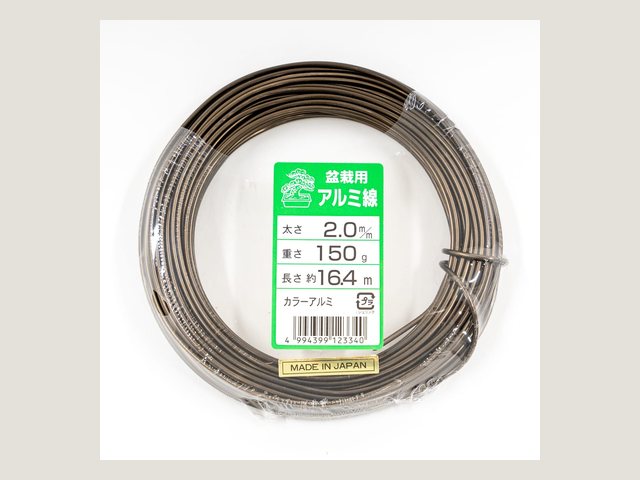
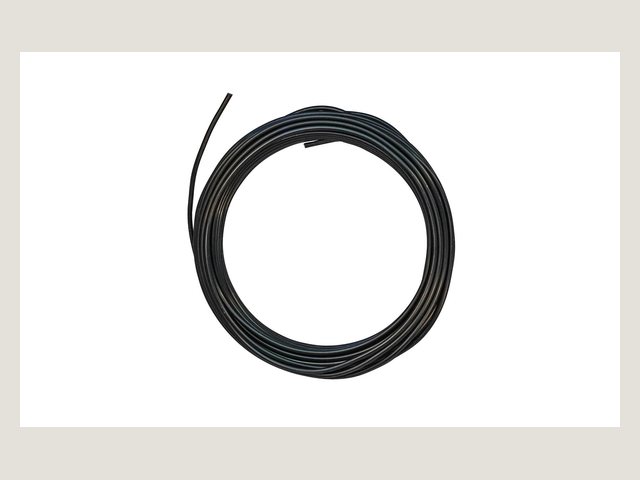
Also on Amazon — Japanese brown anodized wire, 2 mm (Wazakura) ↗
2 — SOIL
Akadama,
or a premix.
Repot at bud swell every two to three years. Japanese akadama for the purist; a premix for everyone else.
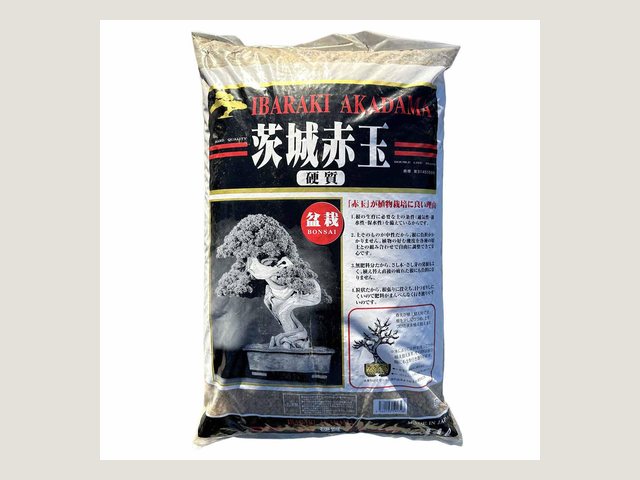
Also on Amazon — hard Ibaraki akadama, small, 14 L ↗ · BonsaiJack #221, 2 qt ↗
3 — SHADE
Afternoon,
broken into dapple.
In zones 7–8 the afternoon is the danger. A 40% cloth, or the shade of a wall you already have.
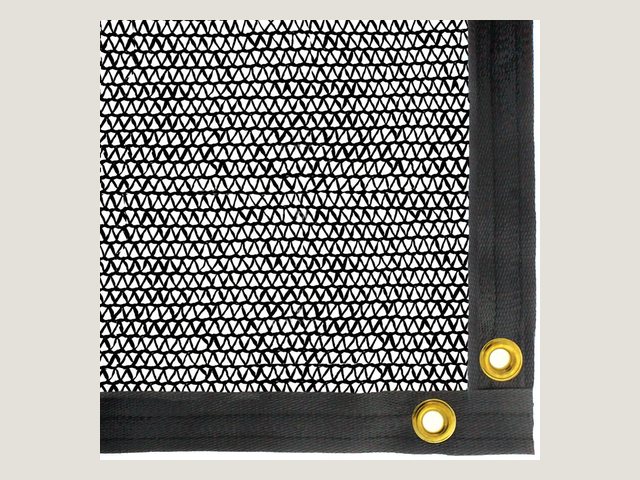
Also on Amazon — 40% black shade cloth, 6 × 10 ft ↗
4 — WINTER
Roots first,
the tree outdoors.
Protect the pot, never warm the tree. A blanket for the hard nights; the ground for the long ones.
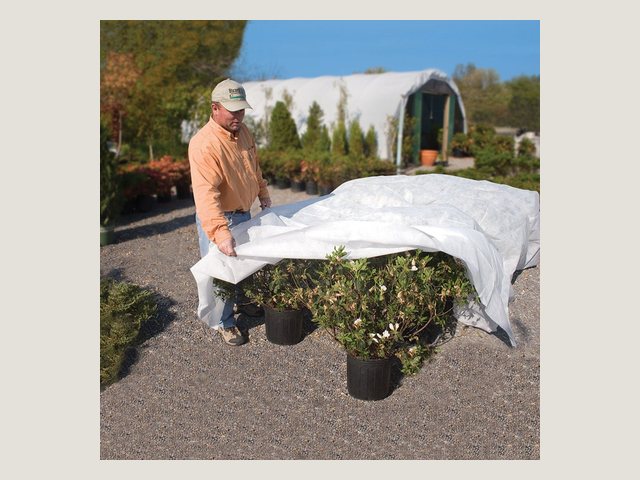
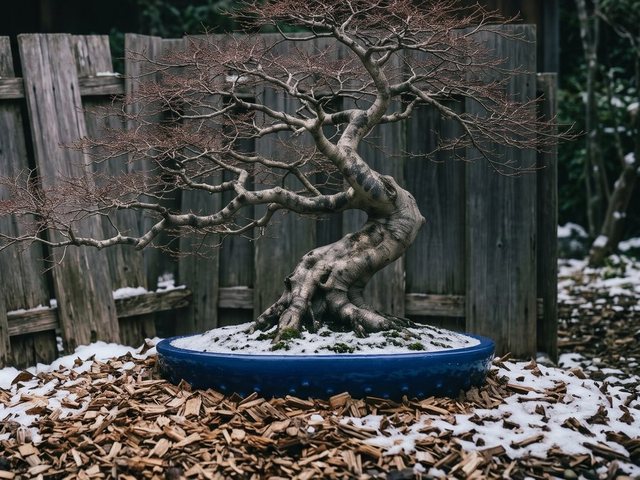
Also on Amazon — DeWitt N-Sulate 12 × 10 ft ↗
08 — WHEN IT LOOKS WRONG
Symptoms, read
calmly.
Brown, crispy leaf edges in summer
Scorch — the species' most common complaint, from heat, wind or a dry day, not usually disease.[1] Move to afternoon shade, steady the watering, and judge the tree by next spring's leaves, not this summer's edges. One caveat from the same extension source: scorch that persists despite shade and good water can signal a struggling root system, which watering alone will not fix.[1]
No leaves in November
Deciduous biology, not death. A maple spends a third of its year as bare architecture — in display tradition, the best third. Scratch a twig if you need reassurance: green under the bark means living tissue in that branch.
Leaves wilted overnight
Almost always water. Soak the pot thoroughly (submerging to the rim for several minutes is fair in an emergency), move to shade, and do not fertilize or prune while it recovers.
It dropped leaves right after delivery
Transit stress; common and usually temporary. Sheltered outdoor spot, normal watering, no interventions for a few weeks — the recovery routine from our maple buying note applies.
09 — QUESTIONS
Asked, answered.
Can I keep a Japanese maple bonsai indoors?
No. Extension guidance places it outdoors in roughly USDA zones 5–8[1][2], and it needs outdoor light levels plus a genuine cold dormancy — the biology behind that zoning. Indoors it declines over months. For a tree that genuinely lives inside, choose a tropical species such as ficus.
How often should I water?
Check daily; water when the soil surface begins to dry, until water runs from the drainage holes. In summer heat that is daily or twice daily; in winter dormancy, occasional. The schedule is the tree's, not the calendar's.
When should I repot?
Early spring, exactly as buds swell and before leaves open — every two to three years for young trees, less often as they age. A tree repotted in full leaf or high summer pays for it in roots.
Does the pot affect the tree's health, or just its looks?
Both: depth buffers summer water, and frost-safe stoneware matters where pots overwinter outdoors. The aesthetic and horticultural logic of the choice is the subject of best pots for Japanese maple bonsai.
Sources
- University of Florida IFAS Extension — Acer palmatum: Japanese Maple (zones 5B–8B; summer leaf scorch without shade or irrigation).
- Utah State University Extension Tree Browser — Maple, Japanese (hardiness zones 5–8).
- N.C. Cooperative Extension (Lee County) — Protecting your Japanese maples from the heat (heat stress, supplemental watering).
- University of Maryland Extension (Maryland Grows) — Japanese maples: plant location and care (siting; dead-twig pruning timing; fertilizer mainly for container culture).
- Mendocino Maples Nursery — Japanese maple care guide (grower practice: watering, placement, pruning).
- USDA Agricultural Research Service — USDA Plant Hardiness Zone Map.
- UMass Amherst Center for Agriculture, Food and the Environment — Overwintering container-grown ornamentals (root killing temperatures; table after Havis, HortScience 11:385–386, 1976 — the page prints 1964).
- University of Illinois Extension — Winterizing container grown trees and shrubs.
- Mountain Crest Gardens — Bonsai Jack soil listing (a Bonsai Jack soil listing: ships from the Bonsai Jack packing facility in Florida).
- Bonsai Tonight — What's with the white stuff? ("copper can stain the trunks and branches of deciduous trees").