
Direct answer
Buy a ficus bonsai from a specialist bonsai seller rather than a home-improvement store, and choose by how the seller describes the tree. Bonsai Boy of New York and Brussel's Bonsai sell trained ficus as the exact tree pictured, from about $125 to $1,200; Brussel's and Eastern Leaf sell honest first trees from $39 to $65, representative of the photo. Check for drainage holes, and buy in warm weather or from a seller that holds tropical trees in cold snaps.
Key takeaways
- Mass-produced ficus often arrive with wire scars, poor grafts, bad soil and pots without drainage holes.
- "Exact tree" is a promise the seller makes in words — read where it is written.
- "Ficus retusa" on a bonsai label is often a Ficus microcarpa; the trunk matters more than the name.
- Willow leaf, Green Island, Cuban laurel and burtt-davyi are all sold as bonsai — seven kinds below, all real and in stock.
- After it arrives: the brightest window, and no repotting, pruning or feeding for about four weeks.
01 — WHERE, AND WHY NOT THE STORE
The cheap ficus
and its problems.
Ficus are sold as cheap bonsai and pot plants in nearly every home-improvement store and nursery. Bonsai Empire lists what usually comes with them: scars from rusty wire that dug into the bark, unattractive shapes, poorly grafted branches in odd positions, bad soil, and sometimes pots without drainage holes. Specialist bonsai traders, it notes, sell everything from young plants to pre-styled and high-value trees.[3]
The species is forgiving, which is why the cheap trees survive at all. Ficus microcarpa is hardy only in zones 9a–11b and is sold as a houseplant because it wants warmth all year;[1] NC State notes that its cultivar 'Ginseng' is commonly mislabelled as Ficus retusa, and calls it great for first-timers.[2] A forgiving tree is a good reason to buy a good one: it will be with you for decades.
A good buy
- A trunk with movement, taper or fused roots
- Height, age and pot size stated in the listing
- Exact or representative, said in words
- A bonsai pot with drainage holes
Walk away
- Wire scars spiralling around the trunk[3]
- Branches grafted on at odd angles
- A pot without drainage holes, or soil that stays wet for days
- A listing with no size and no promise
02 — EXACT OR REPRESENTATIVE
Which ficus is in
the photograph?
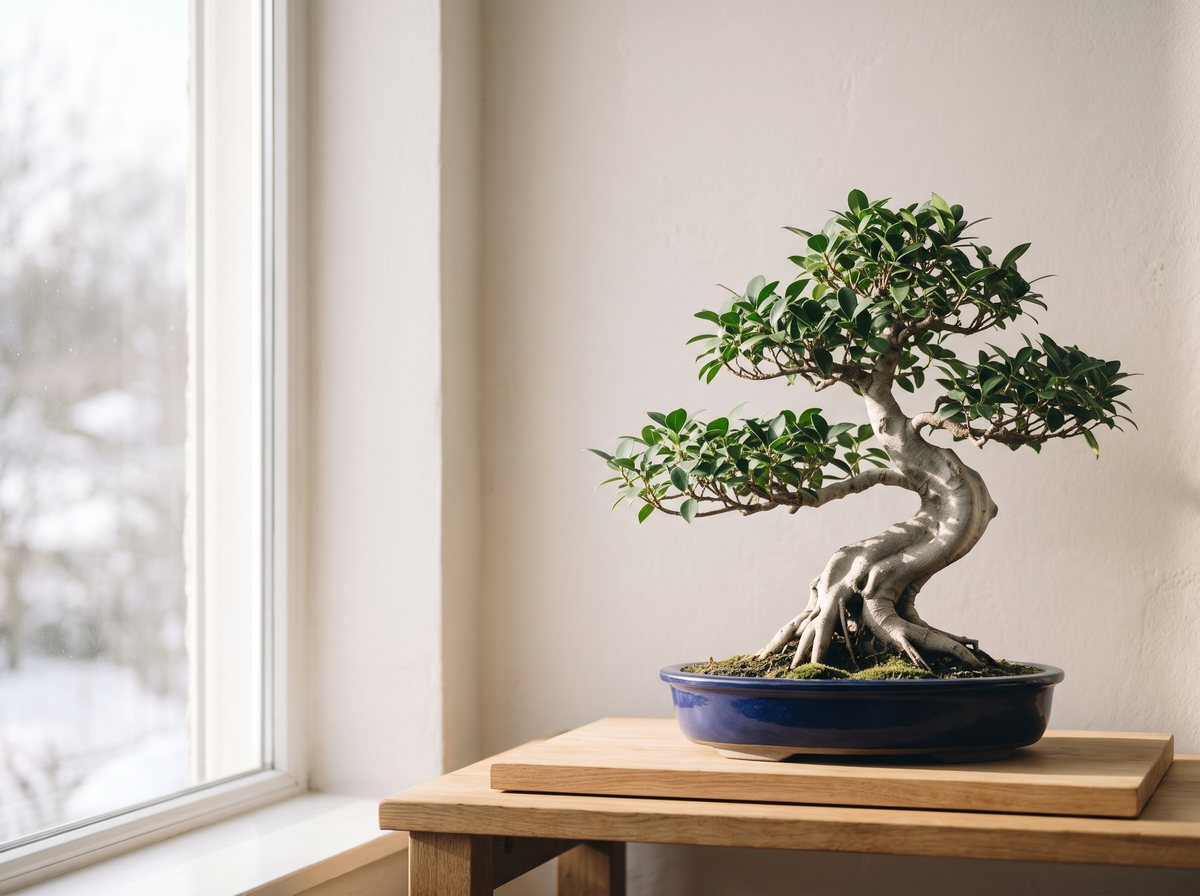
Online bonsai is sold two ways, and ficus uses both. Bonsai Boy's One of a Kind category promises that "you will receive the exact tree in the exact pot as pictured";[4] Brussel's says its specimen photographs show the individual tree that ships.[5] First trees are usually representative: Eastern Leaf writes that the tree's shape may vary from the photo and the pot may vary with availability.
Neither is better. A representative tree at $39–$65 is an honest promise if the listing says so; an exact tree is what you want once the trunk is the reason you are buying. The trouble is a listing that says neither — then assume representative.
| Seller | Promise | Where it is written | Ficus price range seen |
|---|---|---|---|
| Bonsai Boy of New York | Exact tree, exact pot | One of a Kind category page[4] | $125–$1,200 |
| Brussel's Bonsai — specimen | The individual tree that ships | Product images policy[5] | $395 |
| Brussel's Bonsai — standard | Pot colour and style vary; height 8–16" | Product page; product-images policy[5] | $65 |
| Eastern Leaf | Representative; shape and pot may vary | Product page | $39 |
03 — THREE PATHS, REAL TREES
Three honest
paths.
Not a ranking — three relationships with a ficus. Each was live, priced and in stock on the day we checked.
Prices and stock checked November 12, 2026. Plain links — no affiliate.
I — The Specimen
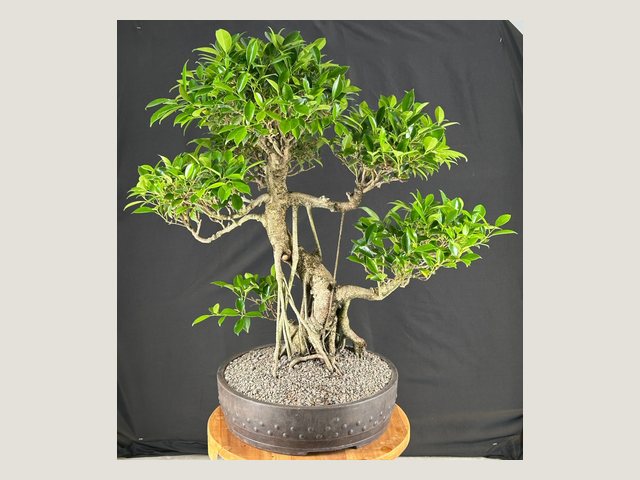
A fifty-three-year ficus with roots that became trunks.
Ficus retusa, banyan style, 53 years (k9948) — Bonsai Boy of New York
This is the form a ficus reaches for in the tropics: aerial roots dropping from the branches and thickening into pillars, so one tree reads as a small grove. Here several have reached the soil and fused with the trunk, under a crown built in tiers. At 31 inches it is a centrepiece, not a shelf tree, and it is sold as the exact tree in the exact pot.[4]
- Size
- 20 × 28 × 31" tall
- Age
- 53 years (seller)
- Pot
- 14" brown round drum
- Stock
- In stock — checked Nov 12, 2026
$1,200shipping separate
Tree page ↗II — A Tree With Character
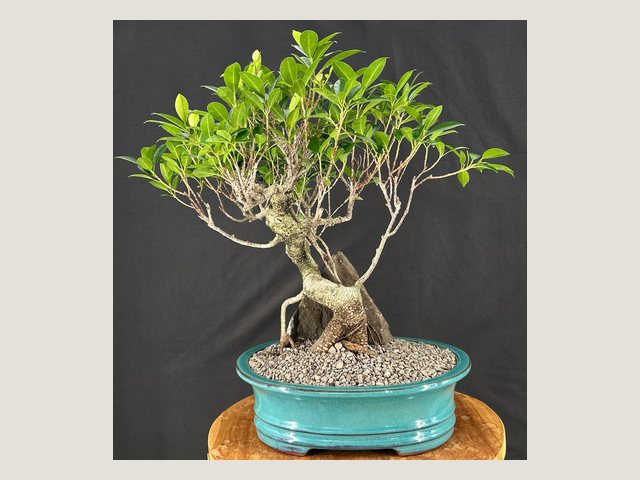
Root over rock, in a turquoise oval.
Ficus retusa, root over rock, 21 years (k1160) — Bonsai Boy of New York
Ficus roots will grip and swallow a stone, and this one has: a twisting trunk rises from roots clasped over the rock, under a light, open crown. The turquoise glazed oval is an unusual choice beside the usual brown drums, and it works for the reason our pots note gives — a cool glaze leaves the pale roots brightest. Exact tree, exact pot.[4]
Dark-leaved and compact instead — a Cuban laurel ficus with exposed roots, 17 years, $225.
- Size
- 18 × 20 × 21" tall
- Age
- 21 years (seller)
- Pot
- 12" turquoise teal oval
- Stock
- In stock — checked Nov 12, 2026
$250shipping separate
Tree page ↗III — First Practice
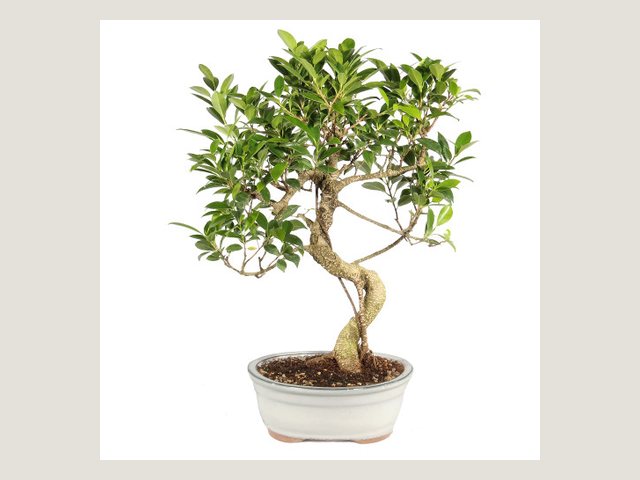
A seven-year Golden Gate, sold honestly.
Golden Gate ficus (CT2006GGF) — Brussel's Bonsai
A trained young ficus with a moving trunk in a ceramic bonsai pot, sold as representative: you receive one like it, pot colour and height varying. That is the right promise at $65. The money saved goes to light — a grow bulb and a tray cost less together than the step to path II.
Smaller and cheaper — Eastern Leaf's miniature Golden Gate, 7–10", $39.
- Size
- 8–16" tall
- Age
- 7 years (seller)
- Promise
- Representative: pot colour and height vary
- Stock
- In stock — checked Nov 12, 2026
$65free shipping over $49 (seller)
Tree page ↗04 — SEVEN KINDS OF FICUS
The shelf,
by leaf.
Ficus sold as bonsai is not one tree. Bonsai Empire names retusa as the most popular and lists microcarpa, tigerbark, willow leaf, Golden Gate and others as similar varieties.[3] Names below are as each seller gives them; leaf and form are what the photographs show. Every tree here is sold as the exact tree pictured.
MICROCARPA — "RETUSA" AND GOLDEN GATE
The classic:
grey trunk, dark oval leaf.
The ficus most people mean. Small dark leaves, a smooth pale trunk, aerial roots in humid air.
Zones 9a–11b · indoors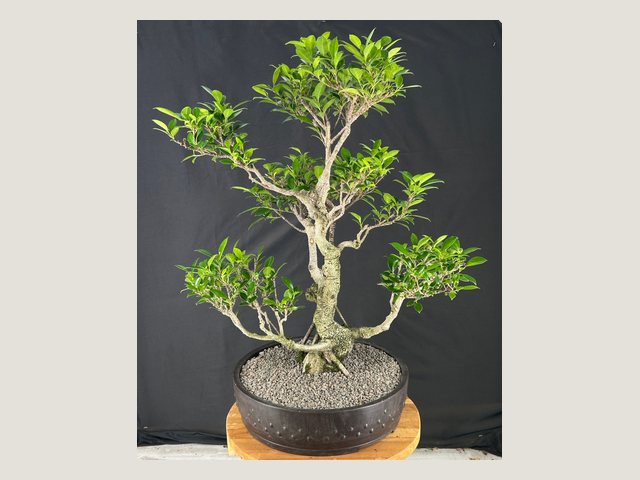
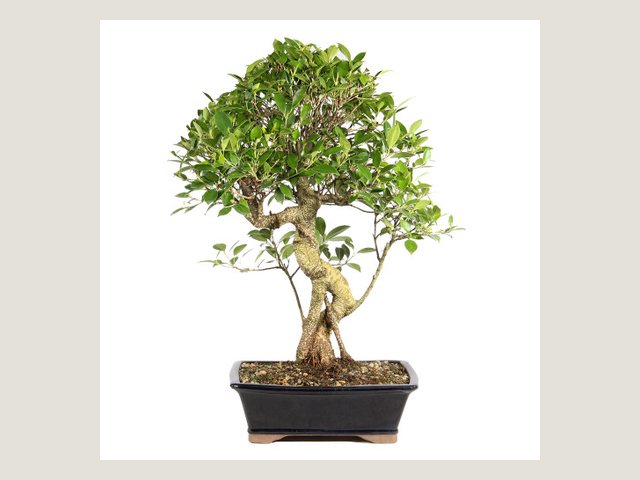
GREEN ISLAND · CUBAN LAUREL
Thick, glossy,
dark leaves.
Both sold as Ficus microcarpa forms. Rounder, heavier leaves than the classic, on compact trees.
Microcarpa forms · indoors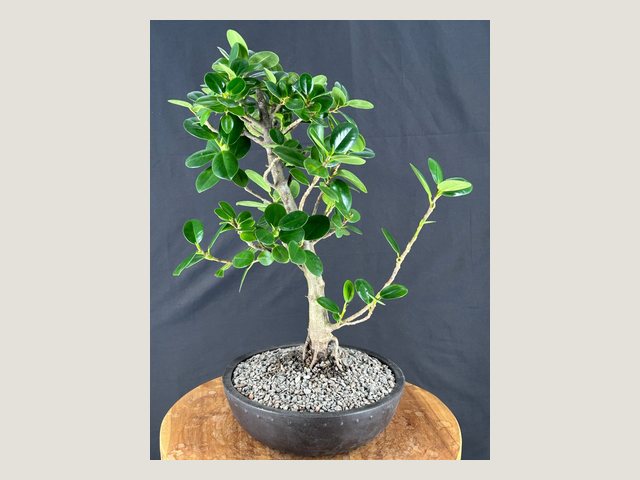
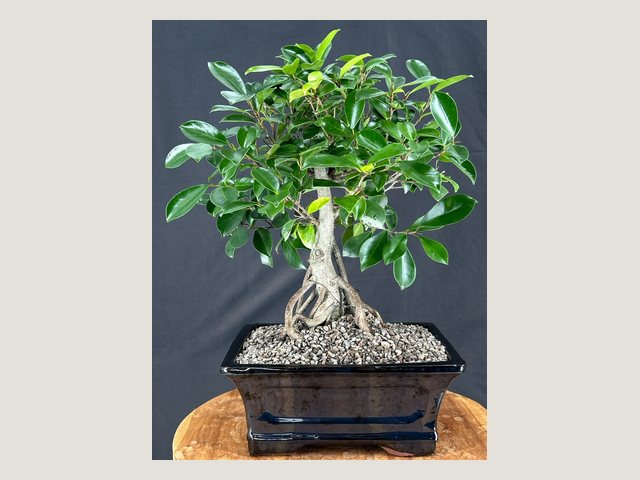
WILLOW LEAF
Long, narrow leaves,
a lighter tree.
Sold as Ficus nerifolia or salicifolia. The narrow leaf gives a fine, airy silhouette that the broad-leaved kinds cannot.
Indoors (seller)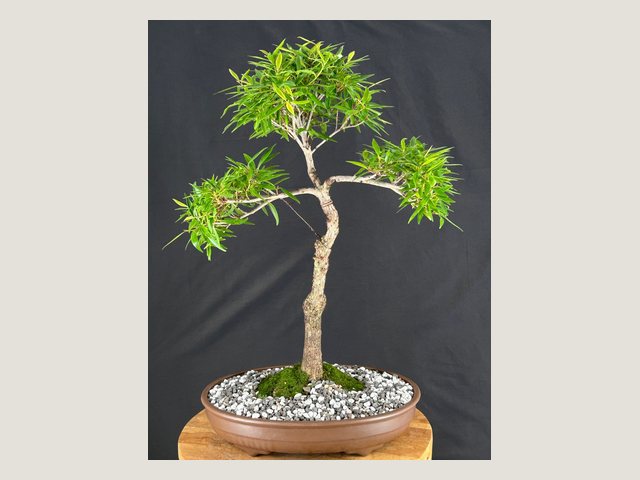
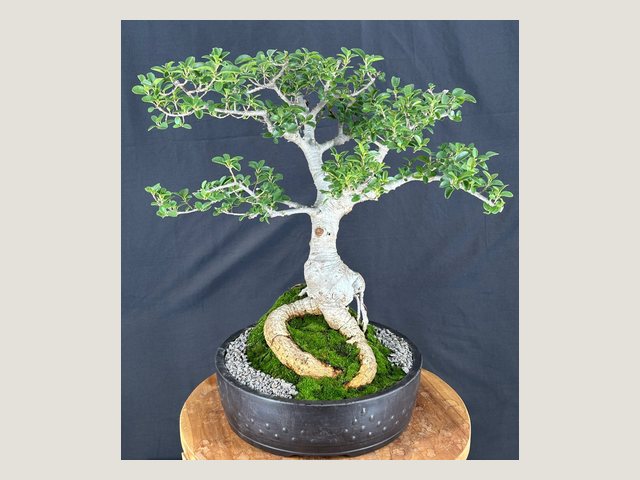
PHILIPPINENSIS · BURTT-DAVYI
The collector's
ficus.
Less common kinds, older trees. One built as a banyan of many roots, one with a root that coils across the soil like a sculpture.
Indoors (seller)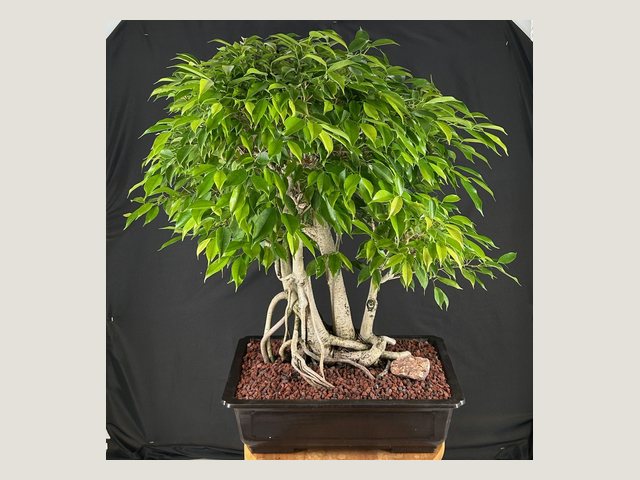
05 — THE FIRST MONTH
Arrival, and
the four-week rule.
A ficus moved from a greenhouse to a living room changes its light more than anything else in its life. Matthaei Botanical Gardens notes that leaves yellowing or falling after such a move is normal.[7] UF/IFAS, writing for commercial growers, advises that once a ficus is placed indoors it should not be moved, pruned, repotted or fertilized for at least about four weeks.[6] Put it in the brightest window, check the soil daily, water when the surface is slightly dry — and leave it alone.
Winter shipping is the other question. Brussel's ships year-round but notes that indoor trees travel best when nights stay above 50°F, and may delay shipments in extreme cold.[8] Ask any seller what it does in a cold snap before you order in December. The full care year is in our ficus care note.
Buy the trunk. Leaves fall and return; the trunk is the forty years you are paying for.
06 — THE ENSEMBLE
What arrives
with the tree.
A tray for the first week, light for the first winter, and the next pot for the first warm spring. Japanese craft is beautiful — and because the beauty comes from the conventions, it can be built from what is near at hand.
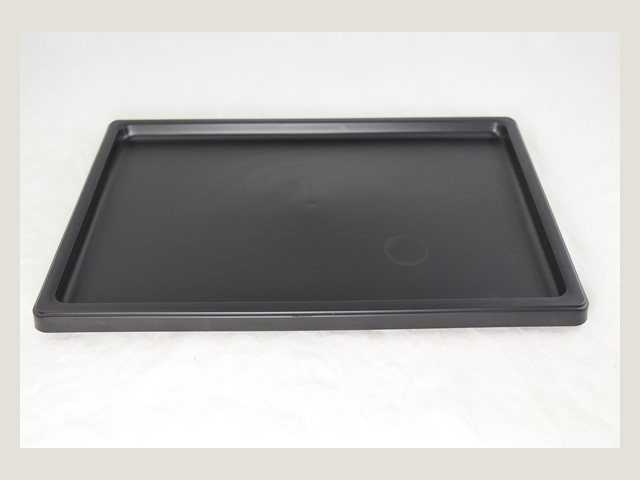
1 — UNDER THE POT
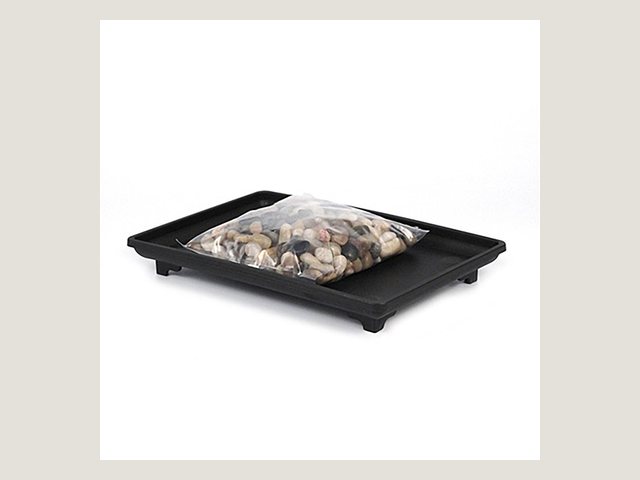
A tray, on
day one.
Gravel and water, the pot above the waterline.[9] It also saves the sill.
2 — LIGHT
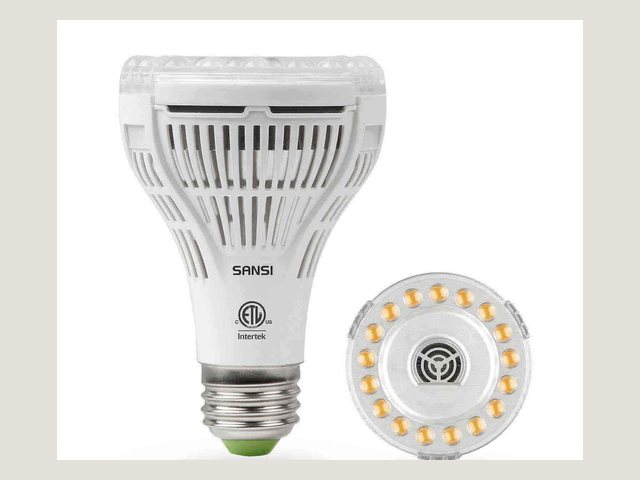
The window,
then a bulb.
Several hours of direct sun, within about three feet of the glass.[3] If the window cannot give it, a bulb can.
3 — THE NEXT POT
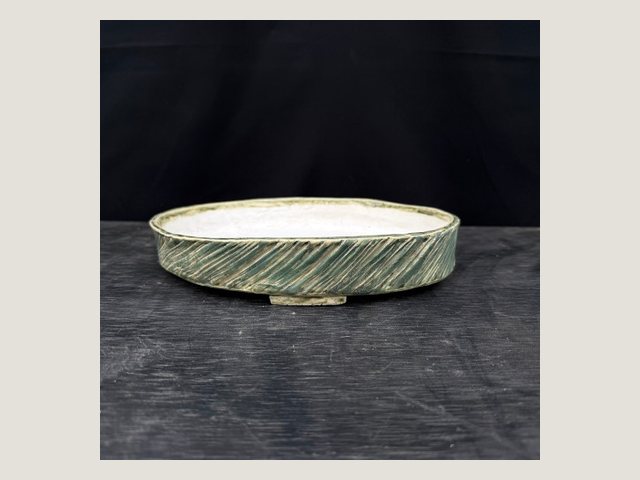
For the first
warm spring.
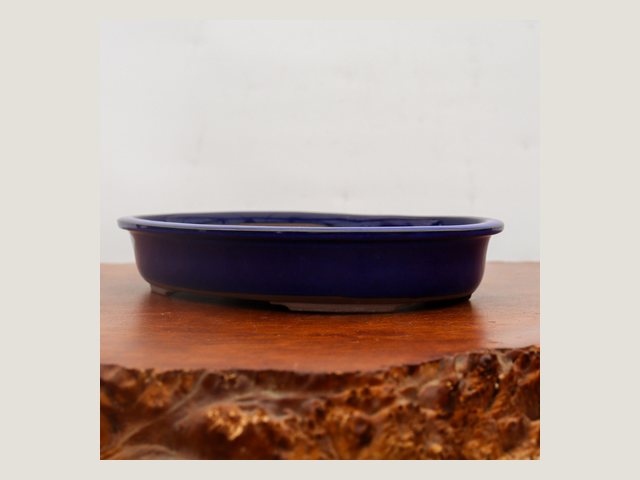
Not now — after the four weeks, and when nights stay above 60°F. A glazed oval suits the curving trunk.
07 — BEFORE YOU HESITATE
The fears, answered
from the facts.
"It's December. Will it survive shipping?"
Ask the seller how it handles cold; Brussel's, for one, notes that indoor trees travel best when nights stay above 50°F and may hold shipments in extreme cold.[8] Be home the day it arrives, and unbox it at once.
08 — BEFORE YOU PAY
The five-point
check.
- Exact or representative, stated in words on the page or its category
- Height, age and pot size in the listing — measured, not "medium"
- A pot with drainage holes, and no wire biting into the bark in the photo
- The seller's cold-weather shipping practice, if it is winter
- A window, or a light, ready before the tree arrives
09 — QUESTIONS
Asked, answered.
Where can I buy a ficus bonsai online?
From specialist bonsai sellers. In this note: Bonsai Boy of New York and Brussel's Bonsai for exact trained trees, Brussel's and Eastern Leaf for representative first trees. Prices checked November 12, 2026.
How much does a ficus bonsai cost?
About $39–$65 for an honest first tree, $125–$395 for a trained tree sold as the exact one pictured, and $650–$1,200 for trees of 38 years and older, on the day we checked.
Is a ficus bonsai from a home-improvement store a bad buy?
Often. Bonsai Empire lists the usual problems: wire scars, poor grafts, bad soil and pots without drainage holes.[3] If you buy one, repot it into a pot with holes in the first warm spring.
What is the difference between Ficus retusa and Ficus microcarpa?
NC State says Ficus microcarpa 'Ginseng' is commonly mislabelled as Ficus retusa, a name that properly belongs to a different plant.[2] For a buyer, the trunk and the promise matter more than the label.
Sources
- NC State Extension Plant Toolbox — Ficus microcarpa.
- NC State Extension Plant Toolbox — Ficus microcarpa 'Ginseng'.
- Bonsai Empire — Ficus bonsai care guide (buying a ficus; varieties; light).
- Bonsai Boy of New York — One of a Kind bonsai trees (exact-tree policy).
- Brussel's Bonsai — Product images (specimen photos show the tree that ships).
- UF/IFAS EDIS — Cultural guidelines for commercial production of interiorscape Ficus (EP136).
- Matthaei Botanical Gardens, University of Michigan — Horticulture at home: growing bonsai inside (2026).
- Brussel's Bonsai — Shipping and returns.
- Iowa State University Extension — How can I raise relative humidity indoors for my houseplants?